Affiliate Marketing for Beginners: Clear First Steps to Start Your Online Path

Imagine sharing a book that changed how you cook, and getting a small thank-you note from the author if a friend buys it through your mention. That's the quiet essence of affiliate marketing for beginners. No flash. Just genuine recommendations.
In one plain sentence: Affiliate marketing means you recommend a product or training you trust, and you may earn a commission if someone buys through your unique link. Trust and usefulness always come first. Commissions? They follow only if value does.
Who Thrives in Affiliate Marketing?
This path suits beginners who enjoy teaching others, writing clear thoughts, or sharing helpful resources. Picture someone who geeks out explaining guitar setups to fellow strummers. Or a parent noting the best quiet toys for evenings at home.
It fits those willing to learn before promoting. No prior sales experience needed. Just curiosity and patience. If you spot problems in daily life and seek solid solutions, you're in the right place for how to start affiliate marketing ethically.
Build on Ethical Ground Rules
Ethics keep this sustainable. Disclose every affiliate relationship upfront. Say, "This post contains affiliate links." Simple and honest.
Recommend only what you understand and have tested. Skip hype like fake urgency—"Buy now or miss out forever!" Never promise results you can't verify.
Avoid spamming friends or lists. Focus on serving, not selling. These ethical affiliate marketing first steps protect your reputation and audience trust.
- Disclose links clearly.
- Test products yourself.
- Share value without pressure.
- No spam. Ever.
How to Start Affiliate Marketing: Practical First Steps
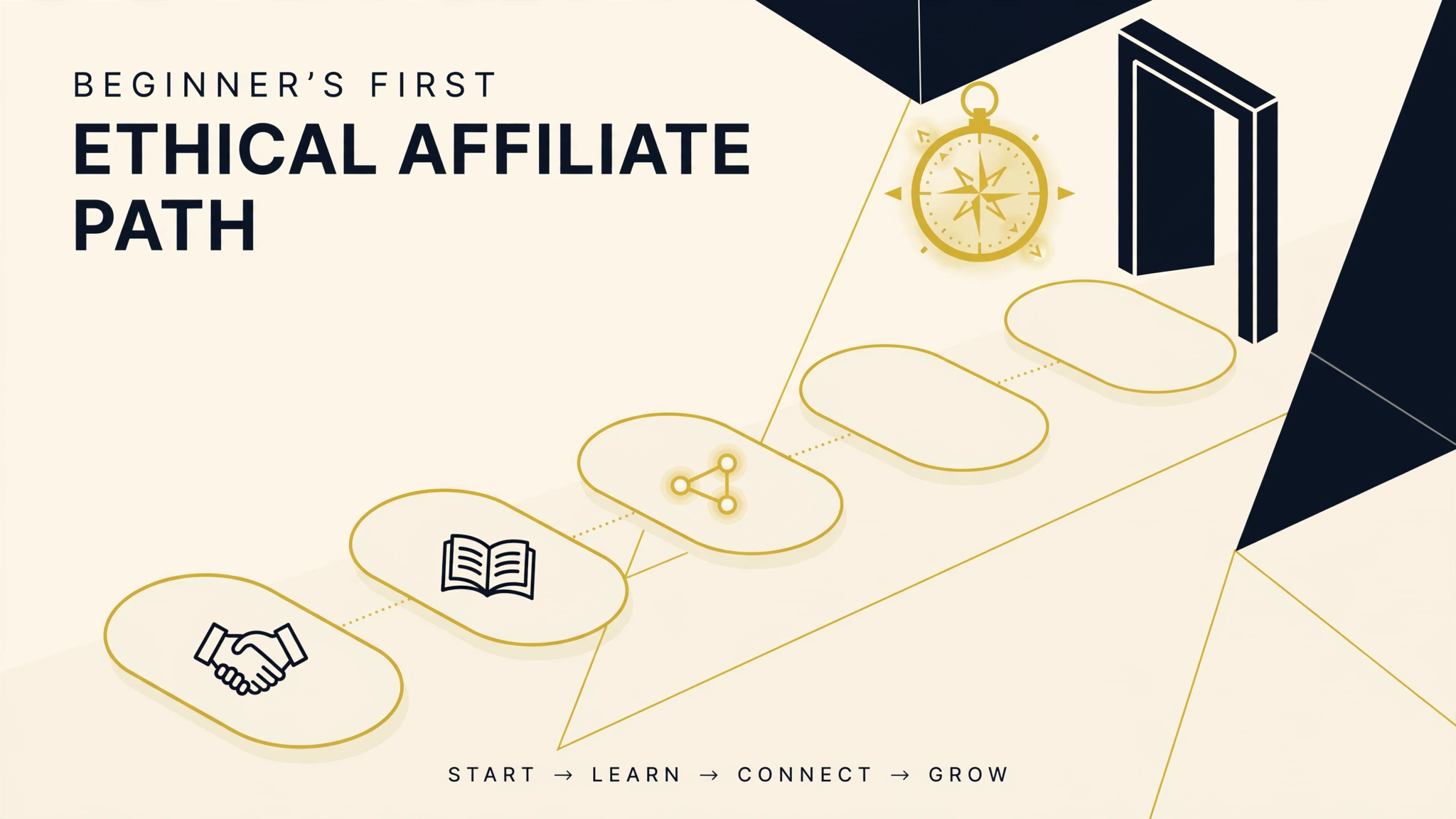
Jump in with focus. Here's your beginner online affiliate path, step by step.
Step 1: Pick a Niche You Know
Choose one topic you're familiar with or eager to study. Love hiking? Start there. Avoid chasing trends. Depth beats breadth for beginners.
Step 2: Identify One Audience Problem
Narrow to a single pain point. Not "fitness," but "easy home workouts for desk workers." Solve real needs with trusted tools.
Step 3: Learn a Product Thoroughly
Sign up. Use it. Note pros and cons. Only then get an affiliate link from networks like Amazon Associates or ClickBank.
Step 4: Create a Simple Home Base
No fancy site yet. Use a free blog on WordPress.com, a Substack newsletter, or a single page. Keep it clean for your recommendations.
Step 5: Share Value First, Link Second
Write a guide explaining the problem and solution. Tuck the link at the end. "Here's how it helped me—link if curious." Help leads naturally.
- Niche selection.
- Problem focus.
- Product deep-dive.
- Basic platform.
- Value-forward sharing.
What Beginners Should Tune Out
The online world buzzes with noise. Ignore "Copy this funnel and cash in." Those shortcuts crumble.
Skip secret traffic loopholes or courses promising overnight floods. Buying fake followers? Poison for trust.
Stick to steady, ethical affiliate marketing first steps. Real growth rewards patience.
Your Realistic Timeline
First weeks: Learn your niche and product. Craft content. Share once.
Months in: Build audience slowly via social shares or SEO. Some earn nothing at first. That's normal. Refinement takes time.
Commissions arrive after consistent value. No rush. This beginner online affiliate path unfolds with effort.
Ready for Structured Guidance?
Thriving Achiever offers a free training to map your ethical path step by step. Watch the free training because it walks through those first steps without pressure to buy.
Free guide
See how affiliate marketing compares
Affiliate marketing is one of five models in our free guide, 5 Online Income Models, Ranked by Startup Cost. See how it compares with freelance services, digital products, e-commerce, and content creation on startup cost, time to first dollar, skill needed, and camera comfort.
This page may contain affiliate links. Thriving Achiever may receive compensation at no extra cost to you.
Disclaimer: Commissions and results are not guaranteed. They depend on your individual effort, skill development, and market conditions.
